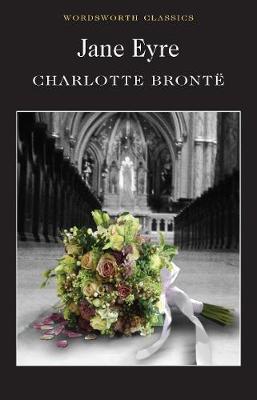
For my annual read of a classic, I went for Jane Eyre. The last six years I’ve read the main six Austens, so thought it was time for my first Brontë (Charlotte). I’d watched the Ruth Wilson adaptation before, and had a rewatch for a refresher before I got going.
In my head, I didn’t think it wouldn’t be that much different to an Austen, the books are within a few decades of each other, but it’s definitely darker and grittier, and less about society. Another massive difference is that it’s told in the first person, from Jane’s perspective, and so is much more emotive and engaging in its narrative.
The book follows Jane’s story from orphaned child living with family that don’t want her, through boarding school, to working as a governess in a house with a secret, and the fall out from that.
I was grateful that my edition had notes in the back, they were helpful to explain a few terms we no longer use, as well as when the girl she was governess for chattered away in French, it kindly gave a translation! One thing I found utterly bizarre though, is that any large place name was anonymised! So you’d get references to -shire, etc. I googled and this seems to be a thing from the time, as if the fact it’s been anonymised makes it sound like they’re real people, but it took some getting used to. Also, the number of times that a door or a box or anything was “unclosed” instead of opened – I wonder when that changed! I really enjoyed when at one point she said “thither I bent my steps” – so similar to the line in ‘O Come All Ye Faithful’ which has always tickled me!
There is talk throughout the book of how Jane is not attractive, both from her and others saying it about her, and the same is said of Mr Rochester, they say it to each other, it’s really quite refreshing, and made the characters feel a lot more relateable. I also love when her refers to her as Janet, I never thought of it as a pet name for Jane, but maybe it is?!
As per usual, a few bits that made me turn down page corners:
- “Children can feel, but they cannot analyse their feelings; and if the analysis is partially effected in thought, they know not how to express the result of the process in words.”
- “It is not violence that best overcomes hate – nor vengeance that most certainly heals injury.”
- “We know that God is everywhere; but certainly we feel His presence most when His works are on the grandest scale spread before us; and it is in the unclouded night-sky, where His worlds wheel their silent course, that we read clearest His infinitude, His omnipotence, His omnipresence.”
- “I would always rather be happy than dignified.”
- “As she grew up, a sound English education corrected in a great measure her French defects.”
In summary: Reader, I loved it.


Anything to add...?